
For those who don’t get it…

Something that occasionally presents itself in the world of leadership is that there is one person, also a leader, who doesn’t “get it.”

Maybe it’s another teacher, a member of administration or your direct supervisor. They see what you are doing, they know that those you lead appreciate what you’re doing, but for one reason or another, they don’t think it applies to them. It’s usually one of the following: they think they’re already doing it,  they think their team is doing fine and they don’t have the time to “waste,” or they think their way is better.
Read more

The Olympics of Dedication

The Olympics have a way of shining a new light on the meaning of dedication.

The opening ceremonies were comprised of one spectacular vignette after another, with thousands of performers, musicians and athletes knowing exactly where to go and what to do during every minute of their moment in the spotlight. That’s dedication.

Every commercial that runs during the Olympic Games tells the athlete’s tale of foregoing dessert, not watching TV, not skipping a single day’s workout in order to be the best. That’s dedication.

Then there was the Chinese farmer who spent the last two years traveling to London via rickshaw just to see the Olympic games. A little extreme, but yes – that’s dedication.

Read more

Fear and Vision

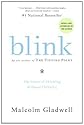
Blink: The Power of Thinking Without Thinking
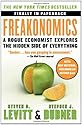
Freakonomics: A Rogue Economist Explores the Hidden Side of Everything (P.S.)

Fear paralyzes; sometimes we allow it to, calling it “caution”. It’s good to be cautious.  Not so good to be paralyzed. Either by over-analysis OR by fear.

(Though, extreme analysis can combat fear; see Freakonomics for the statistics on child restraints…)

A good nugget from Tim Ferriss’s Four-Hour Workweek is this (paraphrased):

The thought of the “worst-case scenario” keeps us from acting, yet the worst-case scenario almost never occurs.

Read more

Effective leaders value clarity

Few things are more energizing than leaving a productive meeting with your team, set ablaze with fresh ideas that will set the wheels in motion. You’re ready to go. Your team is ready to go. You’ve established MT goals and are ready to tackle the world.

It’s a great feeling. Until something, somewhere, gets a little hazy.

Read more

Can you see okay?

“Employees want to constantly be better at what they do. If not challenged, they will look for challenges elsewhere.” –Ilya Pozin

As a leader, you have a job to do: lead people (sounds simple enough, right?). Where you lead them requires vision. Knowing your destination makes it possible for you to challenge them in a “directionally appropriate” manner.

Read more

Why do student leadership?

About a third of my work in leadership training is with youth organizations, with an emphasis on true empowerment of youth leaders to contribute to the organization’s work.  It takes effort, so I was recently asked “Is it worth all the effort to have student leadership?”

I said yes, and here is my full answer:

Many would agree that it isn’t worth the hassle if the only thing you gain is some better role-modeling or extra worker bees.  If, though, you actually train and empower students for the below three purposes, then you’ll have less stress, more productivity, and you’ve provided a developmental opportunity (think “differentiation”) that will benefit them later in life.

Read more

Resist the temptation…

In an earlier post, “Instead of…” was presented as an alternative to saying “Don’t.” “Instead of” forces you to come up with an alternative action, which is usually good.

However, if time is critical, or it’s not all that consequential, or you can’t come up with an alternative, try this:

“Resist the temptation to…”
It works best for quick thoughts that you might usually start with “Don’t”
“Don’t use the side door.”
“Don’t call her so soon.”
“Don’t staple every doggone thing.”
“Don’t leave the lights on in the storage room.”

Read more

Frame! (kind of a book report)

The brilliant folks at Manager Tools–specifically, Mark–have recommended this book highly for years.  I read much of it a while ago, and recently picked it up to re-read it.

In 300 words, here’s why it’s worthy of attention; read at least chapters 1, 2, 16, and 20. (Those chapters recommended by Luther College professor Schweizer — it’s the “condensed” version of taking in the whole book, and will take you less than an hour.)

Read more

“Where do you get that energy?!”

Frequently, people ask me that question.  Those who ask are usually witnessing me in a professional situation; if they saw me after the alarm goes off, there’s no way they’d ask that!

But it’s true- if we lead, we have an obligation to give those we serve our best, and that means maintaining optimal mental and physical energy.  Everyone’s prescription is different, but here’s mine, for what it’s worth.

Read more